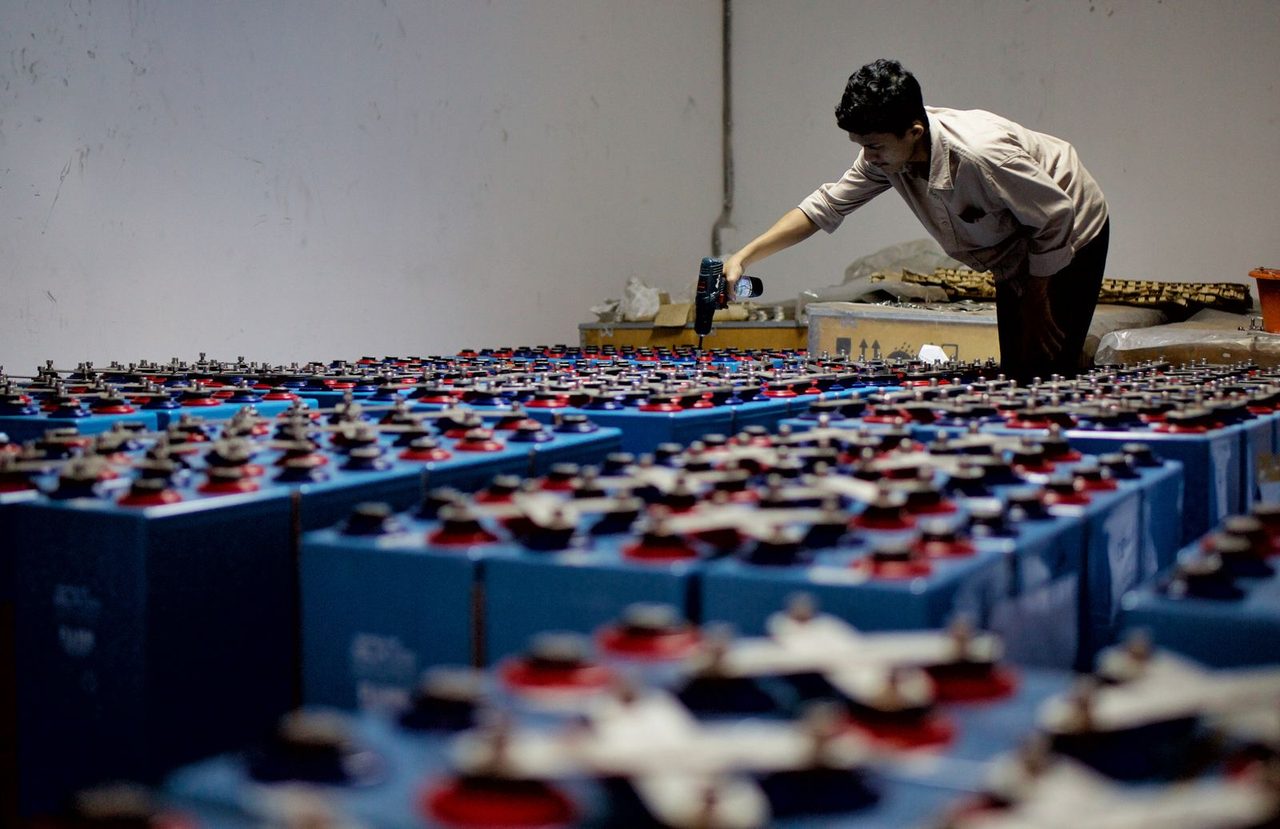
The grid has a timing problem. The U.S. Energy Information Administration (EIA) reported that cumulative U.S. utility-scale battery storage capacity exceeded 26 gigawatts (GW) in 2024, after a record 10.4 GW was added that year — the second-largest source of new capacity after solar. Yet almost all of that is short-duration lithium-ion, built to shift a few peak hours of the day. When the wind stalls and clouds settle in for several days — the "Dunkelflaute" that grid planners worry about — a 4-hour battery is empty before lunch. Long-duration storage is the category designed to cover exactly those gaps.
What "long-duration" actually means
There is no single hard cutoff, but most analysts define LDES as storage that can discharge for roughly 10 hours or more on a single charge, well beyond the 2-to-4-hour lithium-ion batteries that dominate today's grid. The "multi-day" end of the spectrum — 100-hour systems — is built to bridge several consecutive days of low wind and sun. Pumped hydro, which pumps water uphill and releases it through turbines, can run for many hours and remains the incumbent long-duration technology, still making up the largest share of existing storage worldwide. The International Energy Agency frames battery storage broadly as providing short-term flexibility for periods of about 1 to 8 hours; anything comfortably beyond that 8-hour line is where dedicated LDES technologies take over.
Why the grid needs it now
Two forces are pulling LDES from the lab into procurement. The first is renewable penetration. As solar and wind supply a larger share of electricity, the grid needs to bank midday solar surplus and release it not just at the evening peak but across multi-day lulls. The second is the data-center boom. A single AI training or inference cluster can draw city-scale load, and operators cannot tolerate interruptions. In 2026, utility Xcel Energy and Google announced a 300 MW / 30 GWh iron-air storage project at a Minnesota data center — enough to supply clean power for roughly 100 hours — to firm up a grid with rising renewable penetration and exposure to extreme weather. Similar multi-day deals have followed for AI campuses, turning LDES from a climate nicety into critical infrastructure.
The technologies racing to fill the gap
Several very different approaches are competing. Iron-air batteries, pioneered by Form Energy, use the principle of reversible rusting: discharging absorbs oxygen and turns iron to rust; charging reverses it. Form's first commercial 1 MW / 15 MWh pilot with Great River Energy in Cambridge, Minnesota began operating in late 2025, and the company's 100-hour chemistry is now moving toward gigawatt-scale orders. Flow batteries (vanadium, zinc-bromine) store energy in liquid electrolytes and scale by simply adding tanks, offering 6-to-12-hour durations with very long lifetimes. Compressed-air and thermal storage use cheap geography or heat; gravity systems stack weights or shift sand. And hydrogen remains the long-shot, season-scale option. The common thread: each trades the speed and high efficiency of lithium-ion for far lower cost per stored kilowatt-hour at long durations.
The trade-offs nobody talks about
The uncomfortable number is round-trip efficiency. Iron-air batteries are widely cited at roughly 40–50% efficiency, versus 85–90% for lithium-ion — meaning you get back less than half of what you put in. That sounds terrible until you remember the input is often surplus solar that would otherwise be curtailed, so the "lost" energy was nearly free. The real constraint is siting and maturity: pumped hydro needs the right geography, flow batteries use expensive metals, and 100-hour chemistries are only now leaving pilot status. The IEA projects utility-scale battery system costs could fall about 40% by 2030 under today's policies, which is what makes LDES economics move from science project to procurement.
What it means for the transition
The Long Duration Energy Storage Council, formed at COP26, argues the world needs about 1 terawatt (TW) of LDES by 2030 and roughly 8 TW by 2040 — around a 50-fold increase from today — to keep decarbonization on track, estimating the buildout could save up to $540 billion a year by 2040. For comparison, the U.S. added a record ~18 GW of battery storage in 2025, but almost all short-duration; the long-duration layer is still tiny. The investment signal is clear: as solar and wind become the default new build, the bottleneck shifts from generating electrons to banking them across time. Whoever solves cheap, durable, multi-day storage at scale will own a central piece of the 21st-century grid.
None of this replaces lithium-ion — short-duration batteries remain essential for frequency control and daily peaks. LDES is the complement that covers the hours and days lithium-ion cannot, turning "clean when it's sunny" into "clean on demand." That distinction is why analysts now treat long-duration storage not as a footnote to the battery story, but as the missing link between today's renewable buildout and a grid that actually runs on it.