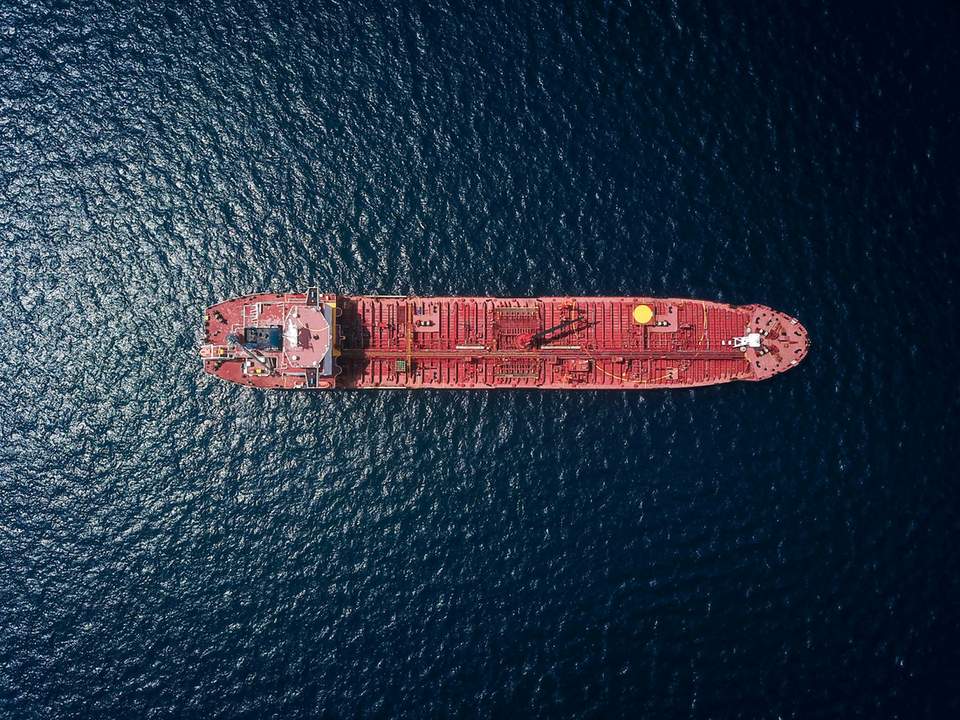
Maritime shipping is the circulatory system of the global economy: it carries over 80% of world merchandise trade by volume. It is also responsible for roughly 3% of global greenhouse-gas emissions — more than a billion tonnes of CO2-equivalent a year, according to the IMO's Fourth GHG Study. That may sound small next to power generation or road transport, but shipping is uniquely stubborn to clean up. Ships are built to last 25–30 years, so a vessel ordered today will still be sailing past 2050. And because they operate on the open ocean, they cannot draw on shore-side renewable electricity the way a factory or a train can. Each vessel is, in effect, its own remote, mobile power station — and that is the heart of the problem.
What the IMO actually agreed in 2025
In April 2025, at its 83rd Marine Environment Protection Committee (MEPC 83), the International Maritime Organization approved the draft IMO Net-Zero Framework — the first global regime to combine mandatory emissions limits with a carbon price across an entire industry. It is designed to slot into MARPOL Annex VI and apply to oceangoing ships above 5,000 gross tonnes, which account for about 85% of international shipping's CO2. The mechanism works in two parts. First, a global fuel standard forces ships to lower the greenhouse-gas fuel intensity (GFI) of the energy they use, measured on a well-to-wake basis — from fuel production through to combustion, not just at the exhaust. Second, an economic measure: ships that exceed GFI thresholds must buy remedial units, while those running on zero or near-zero fuels earn tradable surplus units and rewards from a new IMO Net-Zero Fund.
The framework targets net-zero emissions "by or around" 2050, echoing the 2023 IMO Strategy's indicative checkpoints of at least 20% (striving for 30%) cuts by 2030 and at least 70% (striving for 80%) by 2040. Adoption was advanced through 2025–2026, with entry into force planned for 2027. What makes it notable is not any single number but the architecture: a single global rule that prices carbon for a whole industry at once, rather than leaving it to a patchwork of regional schemes.
The fuel puzzle
There is no single clean drop-in fuel for the ocean, and that is the second reason shipping is hard. The leading contenders each carry real trade-offs. Green methanol is the early favourite for newbuilds: it is easier to handle than most alternatives and works in dual-fuel engines already being delivered by Maersk, CMA CGM and others. But its green credentials depend entirely on how it is made, and scalable green supply is still scarce. Ammonia offers zero carbon at the point of use and good energy density, but it is toxic, raises NOx concerns, and lacks bunkering infrastructure. Advanced biofuels can be "dropped in" to existing engines, yet volume and sustainability constraints cap their role. Liquefied natural gas is a popular bridge fuel — cleaner-burning than heavy fuel oil — but it remains fossil-based and leaks methane, a potent greenhouse gas. Hydrogen is promising for ports and short-sea routes but impractical for long-haul ocean freight because of its low energy density by volume. The result is a fragmented transition with no clear winner, which is precisely why the IMO prices emissions rather than mandating one fuel.
Why this is harder than cars or power
Three features make shipping harder than the sectors already decarbonizing fastest. First, energy density: a container ship at full load needs vastly more energy than any truck or train, and batteries alone cannot yet carry that weight across oceans. Second, asset longevity and fragmentation: the world fleet numbers in the tens of thousands of vessels owned by a diffuse base of operators, so a single policy signal diffuses across a slow-turning industry that turns over on a 30-year clock. Third, equity: shipping is a global commons governed by international treaty, and the costs of clean fuel fall hardest on developing states and small island nations that barely contributed to the problem. The IMO Net-Zero Fund is explicitly designed to channel pricing revenues back to those countries for training, infrastructure and just-transition support — a recognition that the transition must be fair to be durable.
What is already moving the needle
Despite the difficulty, momentum is real, and much of it is available today. Efficiency is the cheapest abatement on the table: "slow steaming" — trimming a knot or two of speed — can cut fuel use by up to 30%; hull and propeller optimization, air-lubrication and wind-assist sails shave more; better weather-routing software trims waste. On the demand side, the European Union has already pulled shipping into its Emissions Trading System and adopted FuelEU Maritime, putting a real carbon price on voyages to and from Europe. "Green corridors" — agreed lanes where carriers, ports and cargo owners commit to low-carbon fuel — are moving from memoranda to actual deployments. And shipyards are now delivering dual-fuel newbuilds, with order books stretching toward 2029, that can run on methanol or ammonia as supply arrives. None of these alone solves it; together they bend the curve.
The takeaway
The hardest part of shipping's net-zero puzzle is not inventing a clean fuel — it is coordinating fuel production, bunkering infrastructure, ship design and global regulation at the same time, across an industry that turns over on a 30-year clock. The IMO's pricing-and-standards framework is the first credible attempt to do that at planetary scale. For businesses, the practical signal is clear: carbon costs on freight are now real and rising, so factoring them into logistics planning is no longer optional. For everyone else, the lesson is that decarbonization is rarely a single switch — and shipping is the clearest proof that the last few percent are often the hardest part.