The Real Cost of Running an AI Data Center in 2026
By Luminesca · Updated 2026-09-08 Analysis compiled from public reporting with AI-assisted drafting. See our editorial policy.
📅 Aug 3, 2026🏷️ Energy / Data Centers⚡ Power, not chips, is the new bottleneck
⚡
The AI boom has made data centres the most capital-intensive infrastructure build of the decade, and the numbers are staggering: electricity, not chips, has become the binding constraint. A single large AI data centre can draw as much power as a small city. This guide breaks down where the money goes and why power matters more than compute.
Hardware is the headline cost. AI accelerators are the largest single expense: a cluster of thousands of GPUs runs into the billions. The shortage of these chips and the lead times to acquire them have made hardware procurement a strategic bottleneck as much as a budget line.
Electricity is the hidden constraint. The power draw of a large AI cluster is measured in hundreds of megawatts - comparable to a mid-sized city. Grid operators in several regions are revising demand forecasts upward specifically for AI, and new transmission and generation capacity takes years to build. Power availability, not cost, is increasingly the limit on where and how fast AI infrastructure can grow.
Cooling compounds everything. High-density AI racks generate enormous heat, requiring liquid cooling in modern designs. Cooling systems consume additional power, add construction complexity, and are a major reason new facilities take 18–36 months to build despite modular construction techniques.
Construction and land. The physical build - shell, power infrastructure, cooling, networking - can rival hardware cost. Data centre developers are racing to secure land with cheap power, water access and grid capacity, which has pushed investment toward regions with hydro, nuclear or stranded renewable energy.
The economics of the whole system. When you total hardware, power, cooling, construction and operation, a large AI data centre is a multi-billion-dollar, multi-year bet. The industry is betting that AI demand justifies it; the risk is that utilisation falls short of the enormous fixed costs.
For anyone planning AI infrastructure - or simply trying to understand the AI economy - the mental model is: compute is the raw material, power is the factory. Every forecast about AI growth runs into the same question: where will the electricity come from? The companies and regions that answer that question will host the next wave of the industry.
Visual Highlights
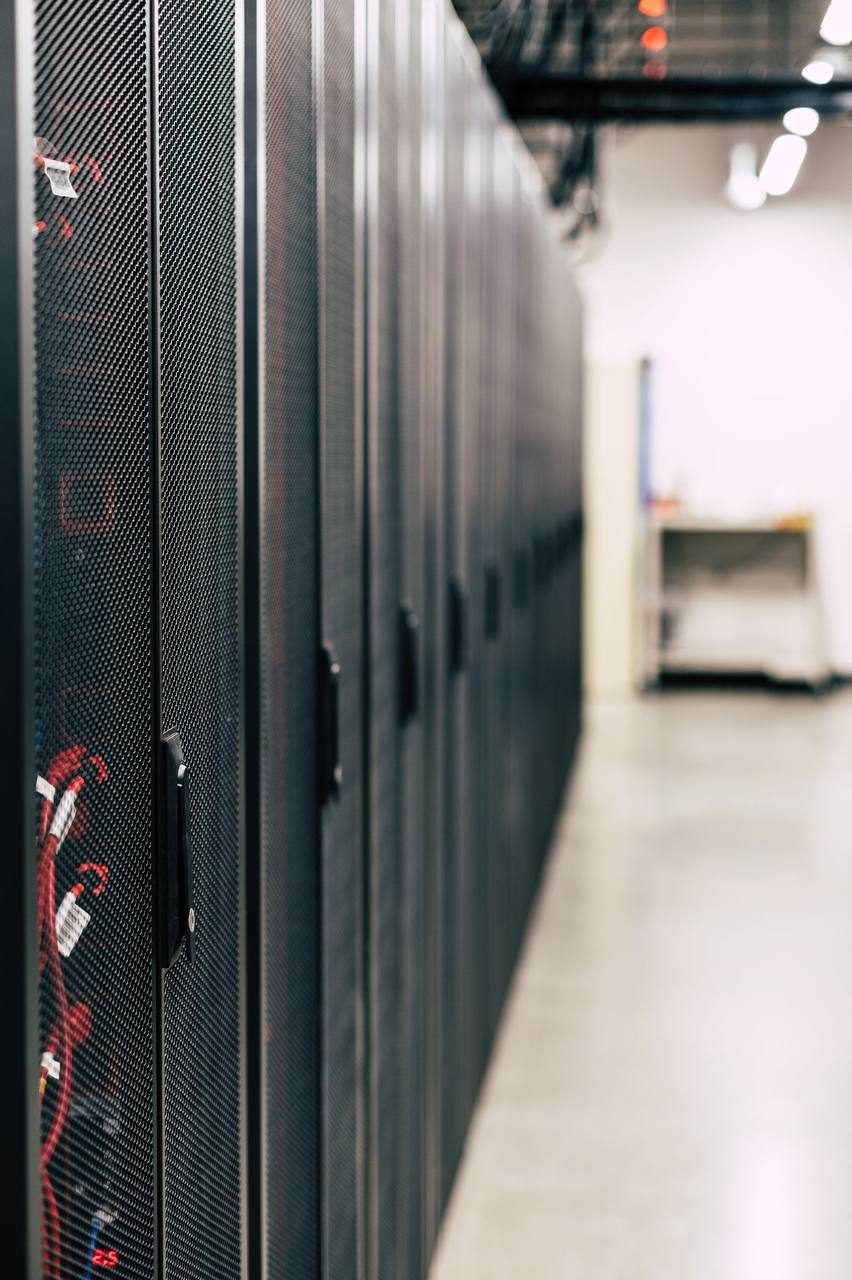
Data centre racks - the physical reality behind the AI boom.
Power purchase agreements decide project viability.
Electricity contracts are now the core underwriting. A data centre is a two-decade bet on power prices, and the queue for grid connections has turned developers into power planners: signing long-term power purchase agreements, financing on-site generation, and siting projects by megawatts available rather than fibre routes. The published figures explain why - a large AI campus draws on the scale of a mid-size city, and grid interconnection waits are measured in years. Projects that locked power early are the ones breaking ground; projects that assumed the grid would be there are the ones waiting.
Siting now follows generation, and it reshapes the map. The consequence is visible in where construction happens: capacity is clustering where power is cheap and available - regions with hydro, gas, or fast-tracked renewables - rather than where internet companies historically headquartered. For buyers of compute this matters directly: capacity, pricing and even latency characteristics of your future AI workloads are being decided by power contracts signed years before the GPUs ship. Power, not silicon, is the commodity on which the AI buildout is actually leveraged.
Utilization is the metric that decides returns.
Capex is only half the story; the other half is keeping it busy. The economics of a data centre are an exercise in utilisation: hardware depreciates on a fixed schedule whether or not it is rented, so the spread between utilisation and cost of capital is the business. Owners with committed multi-year leases (hyperscalers, model labs) finance cheaply and run predictable margins; speculative capacity lives or dies on filling racks quickly. That is why the market has bifurcated into pre-leased builds that start construction immediately and speculative builds that hesitate - and why rental prices stay elevated despite record supply: the supply that matters is the supply with power and tenants attached.
Cooling and power overheads set the real floor on price. Every kilowatt of compute needs its support systems - cooling, conversion losses, redundancy - typically adding half as much again to facility power before a single calculation runs. This overhead is why efficiency innovations move prices: better cooling directly improves the margin structure of every rack. Watch the overhead ratio as the honest health metric of any facility: it compresses only with genuine engineering, and it is the number that separates the operations from the real-estate stories in this market.
Frequently Asked Questions
Why is electricity the bottleneck for AI data centres?
AI workloads are extraordinarily power-hungry, and grid capacity takes years to expand. A large cluster can draw as much power as a small city, so data centre growth is limited less by hardware availability than by how much power the grid can deliver.
How long does it take to build an AI data centre?
Typical construction runs 18–36 months, driven by cooling and power infrastructure complexity. Site selection, grid connection agreements and equipment lead times can add more. This long cycle is why the industry invests far ahead of confirmed demand.
Why are data centres being built near power plants?
Because grid connections for hundred-megawatt loads can take years, while co-locating with generation (or contracting its output directly) shortens time-to-power dramatically. Power availability has become the binding constraint on AI capacity, so siting follows the megawatts - with consequences for regional grids, prices and which projects actually break ground.
How long does a data centre take to build?
Construction itself runs one to two years, but power interconnection and permitting can add several more - the full pipeline from decision to live racks is commonly three to five years. This long lead time is why current supply was ordered years ago, and why today's demand signals will not produce capacity before 2027-2028.