AI Chip Shortage Watch: Will Semiconductors Stay Scarce in 2026?
By Luminesca · Updated 2026-09-08 Analysis compiled from public reporting with AI-assisted drafting. See our editorial policy.
📅 Aug 3, 2026🏷️ Energy / Chips🧭 The chip crunch that keeps reshaping the AI economy
🧭
The AI chip shortage has defined the industry since the boom began, and 2026 is the year the picture gets more complex: demand keeps growing while new supply slowly comes online. The result is a market where the biggest buyers are locked in and everyone else waits. Here is the current state and what it means.
Demand is still climbing. Training larger models and serving billions of inference requests keeps driving accelerator demand upward. Cloud providers, national AI programmes and large enterprises are all placing multi-year orders, which locks up supply well ahead of actual deployment.
Supply is expanding, slowly. The foundries and packaging capacity needed for advanced AI chips take years to build. New capacity coming online in 2026 helps, but it is being absorbed by existing orders almost immediately. The bottleneck has also shifted: packaging and memory bandwidth are now as scarce as the chips themselves.
Who wins and who waits. The dynamics favour the largest buyers: hyperscale clouds with long-term contracts get supply first, and start-ups and smaller enterprises face the longest lead times and highest prices. The shortage has become a strategic moat - access to compute is a competitive advantage in itself.
Prices stay high. Scarcity plus demand means pricing power stays with producers, and enterprise AI budgets keep rising. The silver lining is alternatives: open-weight models that run on more modest hardware, and inference optimisation that extracts more from existing capacity.
Geopolitics compounds everything. Export controls and national-security concerns restrict who can buy the most advanced chips, fragmenting the market into regions with access and regions without. This is reshaping where AI infrastructure is built - a trend we covered in the data centre cost analysis.
The outlook for the next twelve months: supply improves at the margin, but demand keeps pace. For buyers, the practical strategy is to plan for scarcity: reserve capacity early, optimise inference efficiency, and keep open-weight models on commodity hardware as a flexible fallback. The chip shortage is easing, but it is not ending.
Visual Highlights
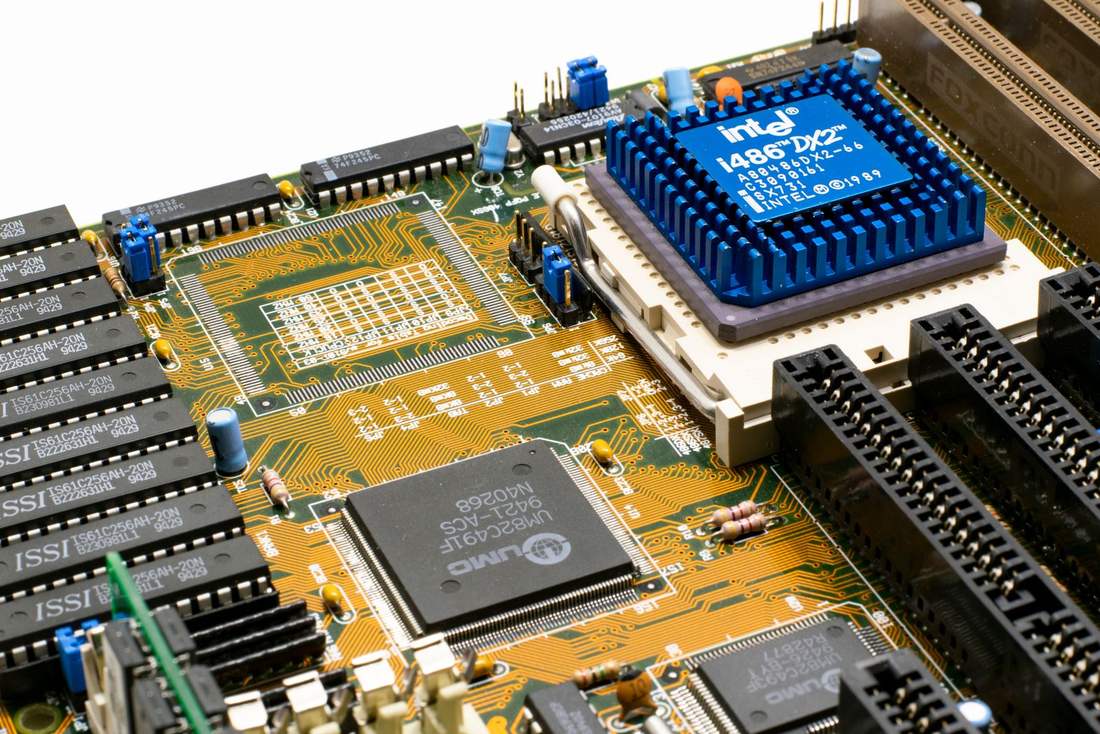
Computer hardware in close-up - every accelerator is contested supply in 2026.
What changes for buyers in 2026.
The practical shift is from scarcity to allocation. For most of the boom the constraint was absolute - fabs could not make enough leading-edge chips for any buyer with cash. The 2026 picture is more negotiated: capacity additions have moved the bottleneck toward packaging (advanced CoWoS-class assembly remains the tightest link) and toward power for the fabs themselves, and access increasingly runs through relationships - long-term agreements, prepayments and design partnerships - rather than spot purchases. Smaller buyers feel this as lead times that stay long even as headline shortage eases, and as the growing premium of securing allocation through a hyperscaler or a model lab rather than directly.
Price curves are flattening, not falling. The expectation cycle repeats each year - new supply arrives, prices should ease - and each year demand for the newest generation absorbs it. What has genuinely changed is the slope at the top end: pricing for the leading accelerators has stopped climbing the way it did, while the mid-range and inference-optimised parts see real competition for the first time in years. For infrastructure planners the consequence is concrete: budget models built on 2023-2024 price curves now overestimate costs, and the savings fund is better spent on the constraints that remain - power, cooling and the packaging capacity everyone is queuing for.
The geography of the supply chain keeps widening.
Diversification is real but measured in years. The foundry map is broadening - leading-edge capacity outside the historic centres, packaging capacity spreading across Southeast Asia, and government-funded fabs in markets that previously had none - yet each addition follows the slow clock of semiconductor construction. The 2026 vintage of announcements lands as capacity in 2027-2029, which is why the strategic calculus for buyers has not changed as much as the press releases suggest. What has changed is optionality at the margin: qualified second sources for critical parts, and buyers who negotiate dual-sourcing into their long-term agreements. The shortage taught the industry its lesson; the allocation era is where the lesson is actually applied.
Frequently Asked Questions
Is the AI chip shortage ending?
It is easing at the margin as new capacity comes online, but demand is growing just as fast. The most advanced chips remain supply-constrained, and packaging and memory bottlenecks persist. Expect continued scarcity and high prices through 2026 and into 2027.
Can I run AI without the most advanced chips?
Yes. Open-weight models run well on commodity GPUs, CPUs and even laptops, especially with quantisation. Many production workloads are better served by efficient smaller models on available hardware than by waiting for the most advanced accelerators.
When will the AI chip shortage actually end?
The absolute shortage has already eased into allocation dynamics: capacity keeps coming online while demand for each new generation keeps absorbing it. The durable constraints are advanced packaging capacity and fab power supply, both expanding on multi-year timelines. Expect abundance at the trailing edge and negotiated access at the leading edge for the next few years.